From rock pools to the trenches
Octopuses live in every ocean, from tide pools and coral reefs to the open sea and the deep trenches.
On the sea floor
Most octopuses spend most of their time on the ocean floor, and most live alone in a den. Smithsonian Ocean: Octopuses, squids and relatives A telltale sign of an octopus den is a pile of empty crab shells on a rocky bottom. Smithsonian Ocean: Octopuses, squids and relatives
The North Pacific
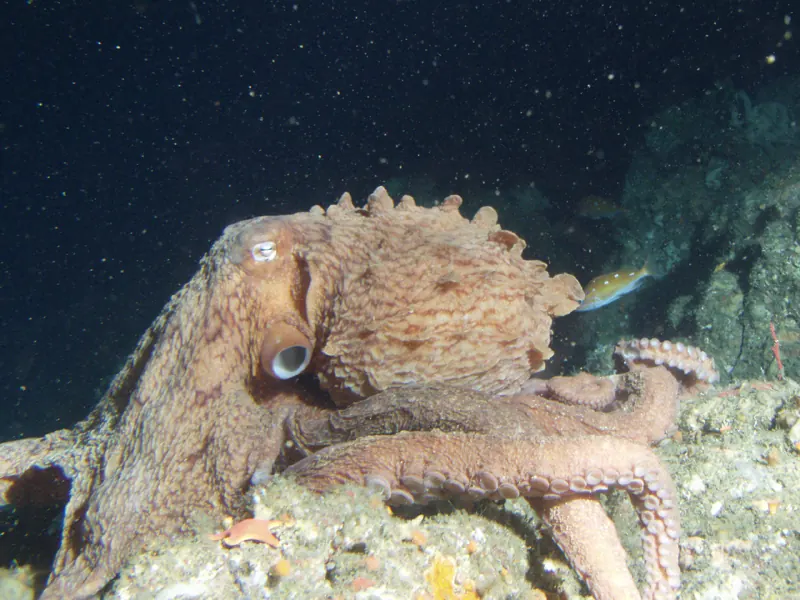
The giant Pacific octopus lives in the North Pacific, from Korea and Japan to Canada, the US and Mexico, in water of 60°F (about 16°C) or colder, from tide pools to 1,500 m deep and more. Monterey Bay Aquarium: Giant Pacific octopus With luck and sharp eyes, you might spot a giant Pacific octopus in a tide pool. Monterey Bay Aquarium: Giant Pacific octopus
At least eight species of octopus live in Alaskan waters. NOAA Fisheries: Octopus research in Alaska There is no fishery aimed at octopus in Alaska, but giant Pacific octopuses are caught by accident in trawl, longline and pot fisheries, and NOAA monitors that catch. NOAA Fisheries: Octopus research in Alaska
Coral reefs
The day octopus (Octopus cyanea) can shape itself like algae or coral to hide from predators or stalk prey. Smithsonian Ocean: Octopuses, squids and relatives The mimic octopus was discovered off Sulawesi, Indonesia. Most sightings come from Indonesia, though it has been seen as far away as the Great Barrier Reef. National Geographic: Mimic octopus
The open ocean
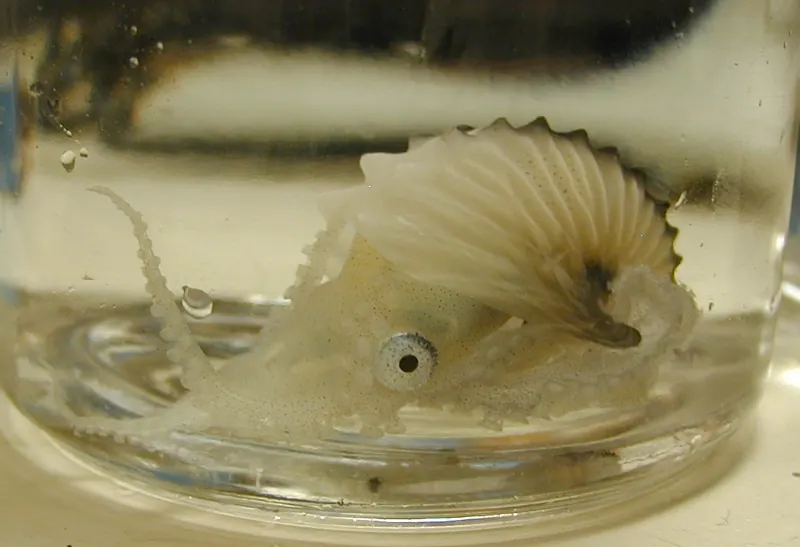
The paper nautilus, or argonaut, is actually an octopus. The female makes a paper-thin, shell-like egg case. Smithsonian Ocean: Octopuses, squids and relatives The argonaut traps air in its papery case at the surface and dives until the squashed air bubble balances its weight. Smithsonian Ocean: Octopuses, squids and relatives
The deep sea
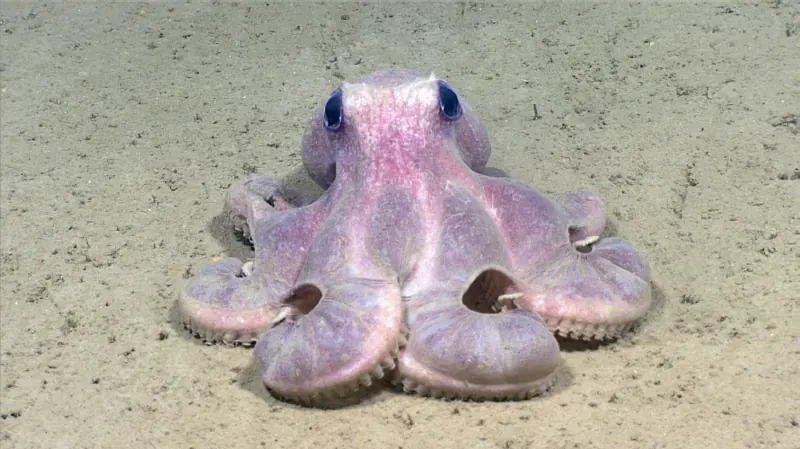
Dumbo octopuses are deep-sea octopuses with two ear-like fins on the sides of the body, which they use to float and swim. Smithsonian Ocean: Octopuses, squids and relatives The dumbo octopus has no ink sac. In the permanent dark of the deep sea there is little point. NOAA Ocean Exploration: Cephalopods
In 2016, scientists on NOAA’s Okeanos Explorer discovered a ghostly ‘Casper’ octopus about 4,000 metres down in the central Pacific. Smithsonian Ocean: Octopuses, squids and relatives · checked 28 Oct 2026 In 2019, cameras filmed a dumbo octopus (Grimpoteuthis) 6,957 metres down in the Java Trench, Indian Ocean: the deepest cephalopod ever reliably seen. Jamieson & Vecchione 2020, Marine Biology (peer-reviewed) · checked 28 Oct 2026
- NOAA Ocean Exploration: the dumbo octopus is one of the deepest-living octopuses and has been found 4,000 metres deep. NOAA Ocean Exploration: Cephalopods · checked 28 Oct 2026
- In 2016, scientists on NOAA’s Okeanos Explorer discovered a ghostly ‘Casper’ octopus about 4,000 metres down in the central Pacific. Smithsonian Ocean: Octopuses, squids and relatives · checked 28 Oct 2026
- In 2019, cameras filmed a dumbo octopus (Grimpoteuthis) 6,957 metres down in the Java Trench, Indian Ocean: the deepest cephalopod ever reliably seen. Jamieson & Vecchione 2020, Marine Biology (peer-reviewed) · checked 28 Oct 2026
- That sighting pushed the known depth limit for cephalopods down by 1,812 metres. Jamieson & Vecchione 2020, Marine Biology (peer-reviewed) · checked 28 Oct 2026
The 2019 Java Trench sighting is newer, and much deeper, than the figures on NOAA’s and the Smithsonian’s pages. Every disagreement we found →
What’s for dinner?
Giant Pacific octopuses eat mostly crabs, clams and other molluscs. Monterey Bay Aquarium: Giant Pacific octopus To break into a shell, an octopus pulls it apart, bites it open or drills it: saliva softens the shell and the radula scrapes the softened bit away. Monterey Bay Aquarium: Giant Pacific octopus
In 1899 a Plymouth newspaper complained that common octopuses had become so abundant they had ‘quite ruined the fisheries’, eating crabs, lobsters and oysters. Smithsonian Ocean: Octopuses, squids and relatives
Who eats octopuses?
Moray eels eat octopuses arm by arm, and dolphins toss octopuses against the water’s surface to stun them before eating. Smithsonian Ocean: Octopuses, squids and relatives Sperm whales and seals eat octopuses and squid: scientists find their tough beaks in the whales’ and seals’ stomachs. Smithsonian Ocean: Octopuses, squids and relatives
Next: octopuses and us →